Image Source: joyful-living.co
The workplace fruit bowl has become something of a symbol. It arrives on Monday, gleaming with good intentions, and by Wednesday it is looking rather sorry for itself, the bananas browning quietly beside an optimistic arrangement of apples that nobody has touched. It is not that employees do not care about their nutrition. It is that a passive provision of healthy options is rarely enough to change entrenched eating habits.
Genuine workplace nutrition improvement requires a more thoughtful and engaged approach, one that understands why people make the food choices they do and creates conditions that make healthier alternatives genuinely appealing rather than merely available.
Understanding the barriers to healthier eating at work
Time pressure is the most commonly cited barrier to healthy eating in the workplace. When lunch breaks are short, convenient options win, and convenience tends to mean whatever is closest, cheapest, and requires the least decision-making. For many employees, this means defaulting to the same choices day after day, regardless of their nutritional content.
Habit is a closely related factor. Food choices are largely automatic, driven by routine rather than conscious decision-making. Changing those routines requires more than access to better options. It requires experiences that create new associations and make healthy choices feel rewarding enough to repeat.
The power of experiential nutrition
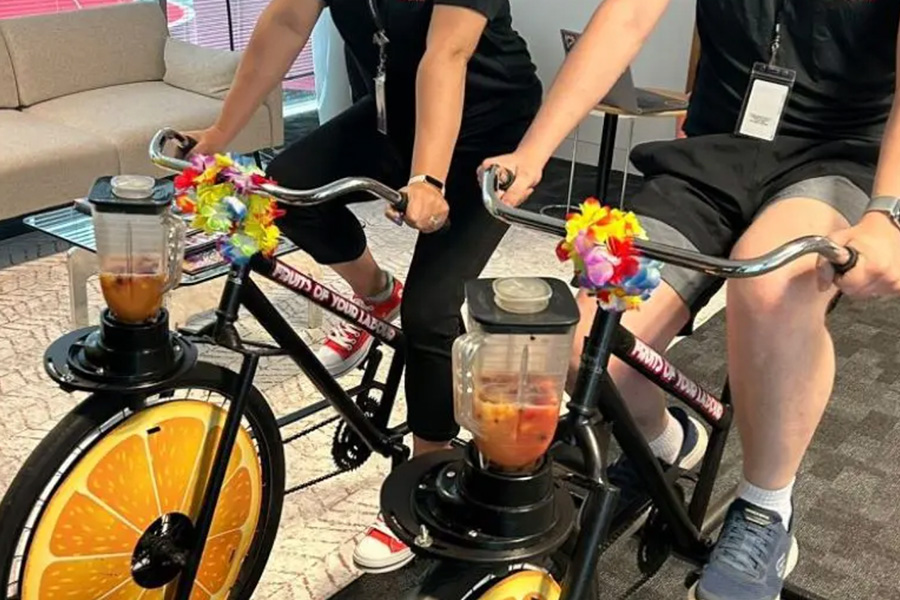
One of the most effective ways to shift nutritional habits is to create memorable, positive experiences around healthy food. Smoothie bike hire is a compelling illustration of this principle. When employees pedal a bike to power a blender and produce their own fresh smoothie, the experience creates a strong positive association with healthy eating that goes well beyond anything a poster campaign or nutritional workshop could achieve.
The act of making something yourself changes your relationship with it. Psychologists refer to this as the IKEA effect, the tendency to place higher value on things you have had a hand in creating. Applied to food, this means that a smoothie made through your own effort tastes better, feels more rewarding, and is more likely to inspire a repeat behaviour than the same smoothie handed to you by someone else.
Integrating nutrition into a wider wellbeing approach
Workplace nutrition works best when it is connected to other wellbeing initiatives rather than treated as a standalone concern. Physical activity, mental health support, and nutritional awareness reinforce each other in ways that benefit the whole person, and programmes that address all three in an integrated way tend to see stronger and more lasting outcomes than those that focus on a single dimension.
This means thinking about how nutritional initiatives can connect with physical activity opportunities, how they can support rather than undermine mental health messaging, and how they can be introduced in ways that feel positive and celebratory rather than prescriptive and health-preachy.
Practical steps for HR and wellbeing leads
Improving workplace nutrition does not require a dramatic overhaul of everything employees eat. It requires identifying a handful of high-leverage interventions that are likely to generate positive engagement and build from there. The most effective starting points are usually those that combine a tangible experience, a social element, and a clear connection to enjoyment rather than obligation.
Regular events that bring employees together around healthy food experiences, combined with improved availability of nutritious options in kitchens and break areas, and clear communication about the thinking behind these choices, create a nutritional environment that supports better habits over time without ever feeling coercive.
Sustaining momentum beyond the initial push
The most common failure mode in workplace nutrition improvement is a strong initial push followed by gradual drift back to old habits. Sustaining momentum requires embedding nutrition awareness into the ongoing culture of the workplace rather than relying on periodic campaigns to do the work.
This means revisiting nutritional themes regularly through different formats and activities, celebrating positive changes when they occur, and involving employees in shaping the nutritional offer rather than imposing it from above. Workplaces that do this well tend to see nutrition become a self-reinforcing part of their culture, something employees value and advocate for themselves rather than something driven entirely by policy and provision.